Wedding traditions offer a meaningful addition for couples to celebrate their love story. They serve as a beautiful tribute to the heritage, faith, and community that have shaped them as individuals, while simultaneously honoring their shared journey on their big day.
We couldn’t talk about wedding traditions without mentioning the “Something Old, New, Borrowed, Blue” rhyme, which involves wearing items that represent the past, new beginnings, good fortune, and love to ensure a happy marriage. Some other well-known traditions include being carried over the threshold to ward off evil spirits, wearing a white dress, the cake cutting, the first dance, and the bouquet toss. The list goes on and on! All of these we may know and love from popular literature and on the big screen – they might even be customs you’ve followed yourself!
If you’d like to dive a little deeper into some well-known traditions that you can add to your big day, then “Wedding Traditions That Are Still Relevant Today” has everything you need. That said, there are thousands of traditions found around the world relating to weddings, and we’re here to shine some light on some unique options that you might not have seen as often in the spotlight before! So, let’s take a peek behind the veil into some fascinating rituals from across the globe.
Handfasting Tradition
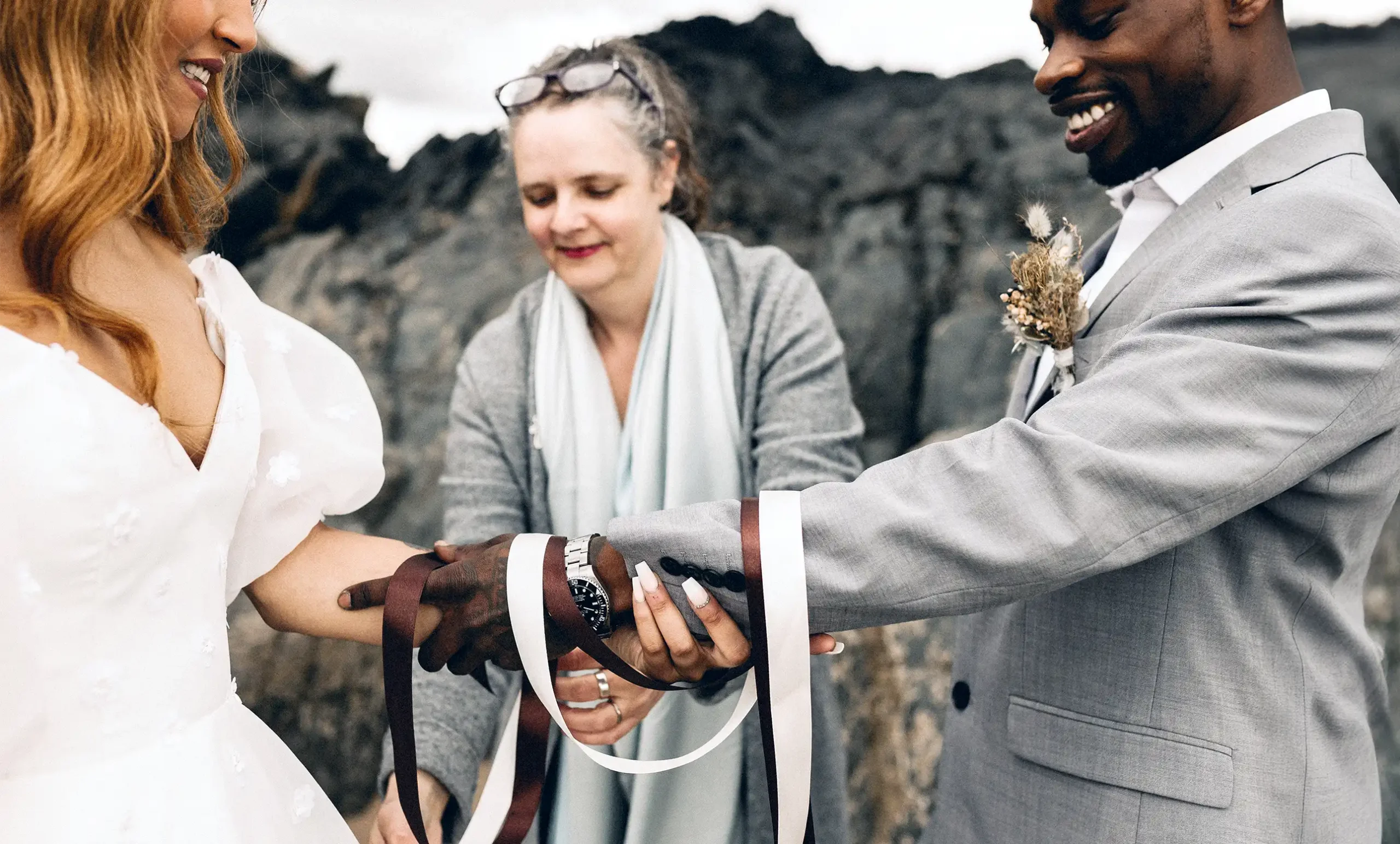
This is a custom with Celtic origins, but it can also be found in cultures around the world – from Norse ceremonies to some Hindu traditions! The handfasting ceremony, snaidhm seirce or love knot, involves binding the couple’s hands together with a ribbon or cord, symbolizing their union and love. You might not know this, but it has also helped as inspiration for the phrase ‘tying the knot.’ If you’re taking a trip to the Emerald Isle, you might even see this Irish wedding tradition in action! Similarly, according to Ukrainian wedding tradition, parents tie the hands of the newlyweds with a rushnyk, or embroidered towel, to grant the new couple blessings and protection.
Wedding Lasso Tradition
Similar to Celtic handfasting, or even Indian varmalas, the wedding lasso is a binding ceremony steeped in Hispanic culture, and can be found in some Mexican wedding traditions! The tradition involves a long lazo (often made of flowers or rosary beads) draped around the couple during the ceremony, typically right after the pivotal “I Do!” moment, representing and strengthening their bond. You might even spot this in Filipino wedding traditions, too!
Sake Exchange Tradition
The San-San-Kudo rite can be found as a part of some Japanese wedding traditions! The couple shares three cups of sake, taking three sips each from the cups. The name of this tradition even translates into “three-three-nine times.” Each sip symbolizes heaven, earth, and humanity, as well as the couple’s unity, love, and respect for each other. This ceremony can typically be found in traditional Shinto weddings, and can sometimes be a full family affair, with the parents of the couple taking sips too!
Dancing & Stealing Tradition
This fun wedding ritual is a two-part ceremony that’s typically found in Hindu gatherings and Indian wedding traditions, and can have many different iterations depending on what area of the world you’re in! The central ritual of Saptapadi involves the happy couple taking seven steps around a sacred fire, with each step representing their vows. During this time, a playful tradition of Joota Chupai occurs, where one side of the wedding couple’s family steals the shoes from the other couple, leading to a mischievous, but wholesome, ransom negotiation for their return!
Wedding Coin Tradition
This tradition appears in many different cultures around the world, and is believed to have originated with the Romans (so you know this will be imbued with a lot of historical significance)! In many cases, the arras matrimoniales, or wedding coins, are presented by the wedding couple to one another as a promise of their future family’s welfare and love. This ritual is celebrated in ceremonies in Spain and in Italian wedding traditions.
Crowning Tradition
The stefana ceremony is commonly found in Orthodox Greek wedding traditions! This tradition is like a real-life coronation, with a special wedding twist – the couple is crowned with gorgeous crowns, linked together by a ribbon. This showcases their wisdom, glory, and the beginning of their new life together as the ‘royal couple’ of their own home. To treasure this commitment to each other, the wedding crowns are kept in a stefanothiki, or a special case. For optimal viewing and reminiscing at any time, of course!
Tea Drinking Tradition
Some Vietnamese wedding traditions include a dedicated period of time, or lễ ăn hỏi, during which the newlyweds serve tea to their family, particularly elders. This symbolizes the couple’s utmost respect for their parents and grandparents, who will, through acceptance of the tea, share their approval of the couple’s marriage and take the opportunity to offer their advice for a long and happy union. When talking tea, we simply can’t not mention the Chinese wedding tradition, jìng chá (敬茶), that makes sharing tea a part of the big day. This tradition is about creating cherished moments for both the couple and their extended family – the tea can even be infused with traditional ingredients like lotus seeds or red dates, symbolizing hopes for a sweet future!
Confetti Tradition
There are many traditions spanning across multiple cultures that include throwing well wishes at the happy couple: they’re showered with wheat in France, raisins and figs in Morocco, and rice in Finland! Pyebaek is a Korean wedding tradition that follows a similar pattern to honor the new pair and toast to a growing family. The parents of the married couple may throw dates and chestnuts at the couple, who will catch them in a cloth made of the wedding dress. These might give the couple an insight into how big their new family will grow!
So, there you have it! A brief glimpse into some special traditions from multiple different corners of the world. From ancient rituals passed down through generations to more modern interpretations, each tradition carries symbolic weight and love, enriching the marriage ceremony with layers of significance and creating lasting memories for the couple and their loved ones.
If you’ve been a part of a ceremony that incorporates these traditions, let us know in the comments below. Or, alternatively, use the comment section to shine your own light on some traditions that are important to you!

Lily is a Content Specialist at Zazzle from Galway, Ireland. Before she could even walk, she was begging her parents to read her fantastical stories filled with great adventures. To this day, just give her a cup of tea and a good book to cozy up with, and she will be happily lost for hours! If she doesn’t have her nose in a book, then she will probably whipping up something delicious in the kitchen for her friends and family, or, negotiating with her house plants to stay alive.
Read more from Lily.