
If you recognize the red-and-blue-striped tie in Ed Hawkins’ Zazzle store, it may be because you saw a meteorologist wearing one while reporting on your local weather! Hawkins is a climate scientist from the UK with a talent for visualizing the alarming impact humans have on the planet. His ‘warming stripes’ graphic has attracted particular attention, and appeared on everything from leggings to glasswork to a Tesla electric car. Since the ties, leggings, and other small items were printed with Zazzle (we can’t take credit for the car!), we had a chat to find out more about his design.
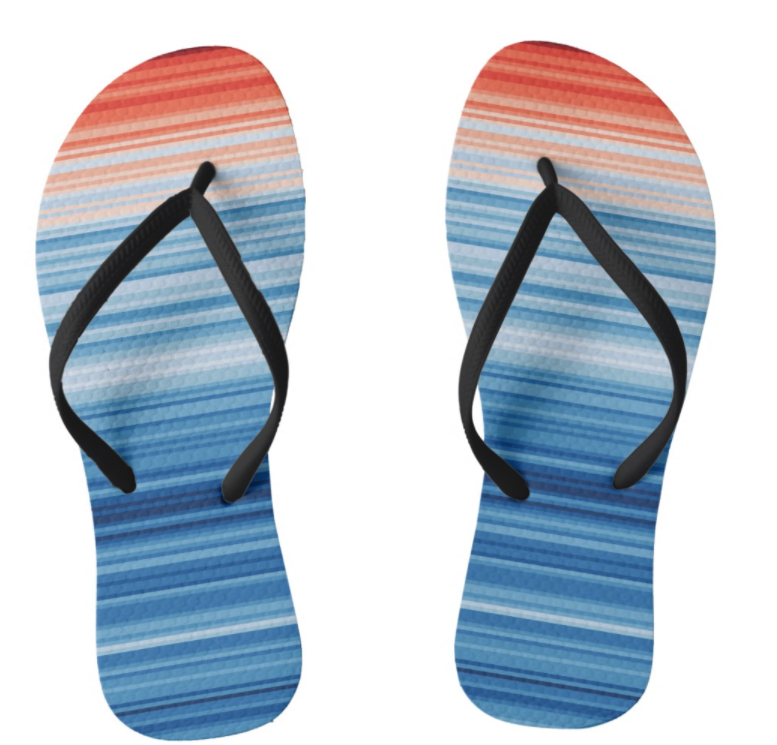
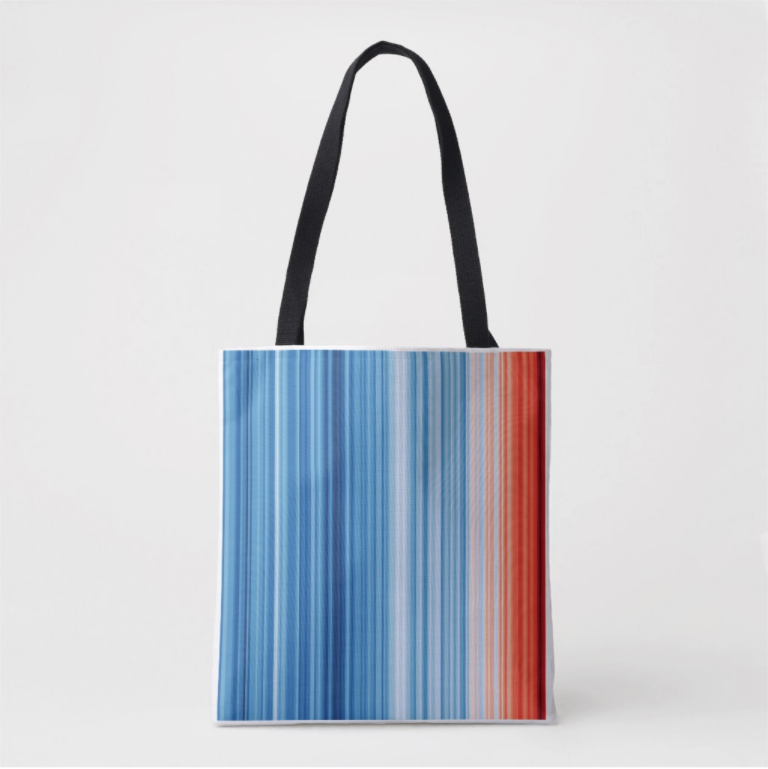
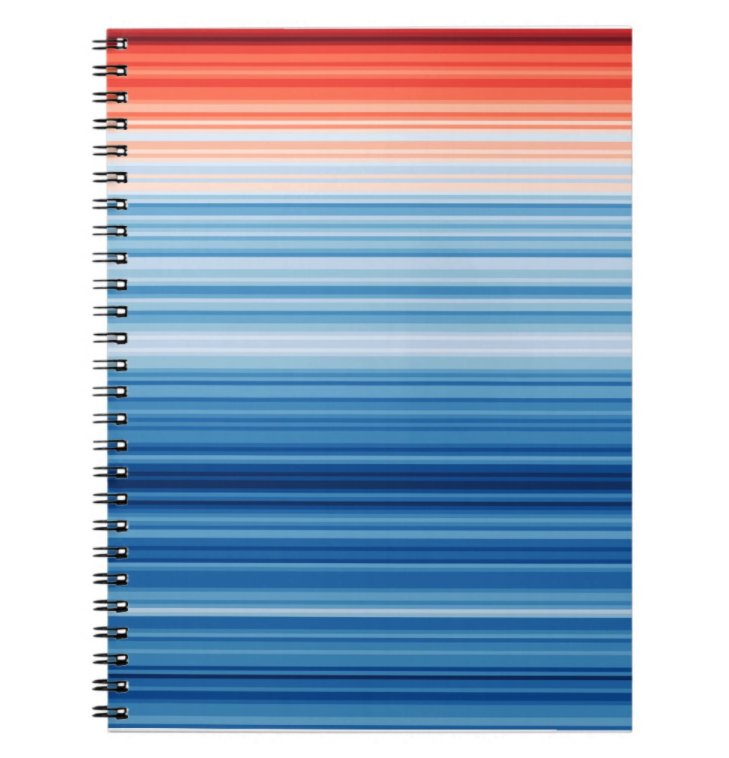
It may look like a barcode or a piece of abstract art, but this vividly-colored visual tells a stirring story about how the earth’s temperature is rising. “Each stripe represents a year from 1850 to 2018, and the color shows the relative annual average global temperature for that year.” explains Hawkins. Dark blue stands for the coldest years and dark red for the hottest. So the fact that the pattern is becoming more and more red displays a very obvious pattern.
Hawkins says this simplicity is key to the stripes’ success: “The design, deliberately, removes any complexity so everyone can grasp what it shows straight away… You don’t need to have any scientific training – it’s just in your face.” The fact that it’s a pretty pattern probably helps too; it’s hard to imagine anyone wearing a regular line graph on a pair of flip flops.
But that aesthetic appeal doesn’t trivialize the issue. Instead, Hawkins thinks visualizations like this one are so important and effective because they kick-start conversations: “Someone may spot the graphic and ask ‘What’s that all about?’ and the discussion starts from there. It’s only a starting point.”
So how did the pattern end up on primetime TV? It turns out Hawkins was introduced to Zazzle by a US colleague. Last year, meteorologist Jeff Berardelli got in touch to ask if he could borrow the design to make some ties for an event raising awareness about climate change. The pair set up the Zazzle store, Climate Visuals, to print ties, as well as buttons, mugs, necklaces, and other items. On June 21 (the summer solstice), 90+ meteorologists around the world wore or showed the products and discussed what they illustrate live on air. It was an impressive coordinated effort and got the attention they were hoping for.
Since then, his Zazzle store has continued to make sales, with products popping up at climate change events and in lecture halls all over the globe. The collection is an eclectic range including leggings, totes, kitchen towels, and socks. Hawkins agrees that the most effective items are probably those that can be worn or displayed in public, simply because they get more visibility. He’s sold at least one of every item, but the mugs, leggings, and ties are the bestsellers to date.
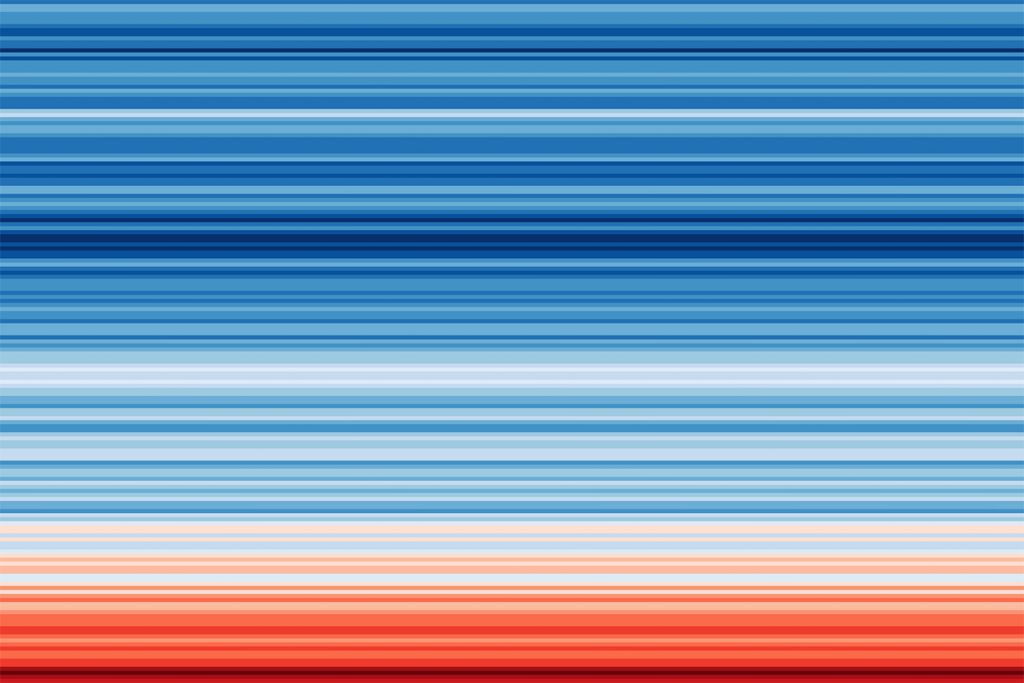
The popularity of his warming stripes has led to more personalized requests. The original graphic is a global one, but colleagues often ask for visuals tailored to their locations. So he’s been creating visuals for specific cities, countries, and regions, and will continue to do that. He explains that local versions allow people to talk about their own area, making the issue more real and relatable: “We’re moving away from a vague, global view of climate change to local conversations about day-to-day experiences.” Will we see leggings specifically for New York City or socks for the south coast of England? Maybe.
The graphic isn’t Hawkins’ first design to take off (he also did the ‘animated spirals’ featured in the 2016 Olympics’ opening ceremony,) and probably won’t be his last. He’s passionate about communicating the facts about climate change to the public and we look forward to seeing what he does next! For now, his stripes will no doubt continue to grab attention. We just hope the pattern starts to change.

Matilda is Marketing Manager in the International Team, bringing Zazzle to customers everywhere from Sydney to Stockholm.