Every year, from December 26th to January 1st, families and communities celebrate Kwanzaa across the U.S. Kwanzaa is an African-American and pan-African holiday, which is typically, though not exclusively, observed by those of African heritage. According to a 2019 AP-NORC survey, 3% of the U.S. population celebrates Kwanzaa, and in recent years it has even spread to France, the UK, and the Caribbean.
Created in 1966 by Dr. Maulana Karenga, Kwanzaa has already developed a notable history and a dedicated following. Founded on the concepts of solidarity, cooperation, and self-determination, Kwanzaa is a secular celebration, but is nonetheless rich with symbolism and ritual. In this article, we acknowledge those who celebrate this beautiful, unique holiday and introduce its central tenets to those new to the tradition.
The Origin of Kwanzaa
As a student and teacher, Karenga experienced the Black Power Movement, met Malcolm X, and witnessed the Watts Riots, which took place in Los Angeles in 1965. In an attempt to reunite African Americans behind a few core principles, and based on his research into African harvest festivals, he proposed a new holiday. Kwanzaa began the following year (derived from the phrase matunda ya kwanza, which means “first fruits [of the harvest]”). An extra ‘a’ was added to the word kwanza to represent the seven children present at the inaugural celebration – each child had wanted to be able to ‘hold’ their own letter.
Seven is a key number in Kwanzaa: there are seven symbols associated with the holiday, seven principles – which we will discuss shortly – and seven days between the 26th of December and the 1st of January. However, despite the placement of Kwanzaa at the end of the Western calendar, it was never meant as a replacement for Christmas – anyone is welcome to observe Kwanzaa, regardless of their connections to Africa or religious faith. Indeed, the phrase matunda ya kwanza was intentionally chosen as the inspiration for the holiday because it is from Swahili: a language that transcends any single region or tribe in Africa.
The Meaning of Kwanzaa
If you want to immerse yourself further in the Swahili language, then the most important phrase to know for Kwanzaa is Nguzo Saba (“The Seven Principles”). The holiday and Nguzo Saba were conceived in the 1960s, shaped by what Dr. Karenga described as “[t]hat defining decade of […] struggles for freedom, justice, and associated goods.” As such, the importance of community values and self-sufficiency are continually underscored throughout the holiday, and participants are encouraged to reflect on a different principle each day. These are Umojia (Unity); Kujichagulia (Self-Determination); Ujima (Collective Work and Responsibility); Ujamaa (Cooperative Economics); Nia (Purpose); Kuumba (Creativity); and Imani (Faith).
Together, these principles, when practiced, help Kwanzaa observers to embody values of African culture and community – particularly when paired with seven symbols: Mazao (crops); Mkeka (a place mat); Muhindi (corn); Mishumaa Saba (seven candles); Kinara (and the candleholder); Kikombe cha Umoja (the Unity Cup); and Zawadi (gifts). Because Kwanzaa is not meant to be a commercialized holiday, any Zawadi exchanged on Kwanzaa are typically handmade. John El-Badr, the director of the Heritage Gallery of the Thurgood Marshall Center in Washington, D.C, remembered receiving fruit and nuts as Christmas gifts because they were all his grandparents could afford. In that same spirit, he said, “Kwanzaa was a blessing to me.” Kwanzaa is a time to be grateful for what we have, in other words, and the seven symbols are further reminders of that.
Celebrating Kwanzaa
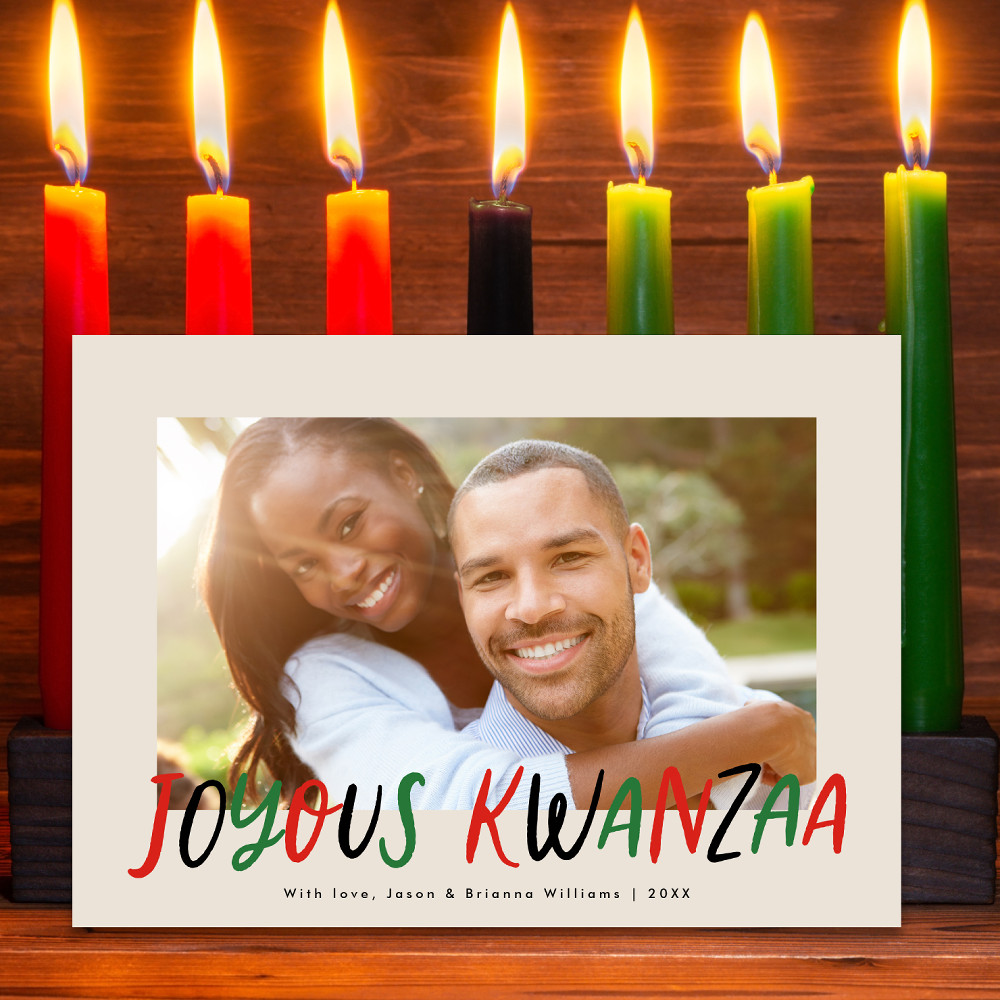
There are several ways to commemorate the Kwanzaa holiday with your loved ones this year. One of the main Kwanzaa activities involves the lighting of Mishumaa Saba on the Kinara. The central black candle represents the African people (or people of African descent) and should be lit on the 26th; then green and red candles are lit on the subsequent nights. Kwanzaa celebrations also culminate in the Karamu, a ceremonial feast during which family and friends enjoy a meal and take turns drinking from the Kikombe cha Umoja. Because of the overarching principles, Kwanzaa is also an opportunity for reflection – on community, responsibility, unity – and for establishing a connection to African culture. This could be done by wearing traditional clothes, playing or listening to traditional music, or learning more about your family history.
To wish someone a happy Kwanzaa, you can say Heri za Kwanzaa! (“Happy Kwanzaa”), but the traditional greeting, used throughout the festival, is Habari Gani? (“What’s Happening?”, in reference to the principle being honored each day). If you would like to include a message in a Kwanzaa card, you could write one of the the following: “Wishing you a blessed Kwanzaa”; “May the seven nights of Kwanzaa bring you health, happiness, and hope”; or “May Kwanzaa bring light and blessings to your home.”



With the holiday approaching, we would like to take this opportunity to wish our readers a joyous Kwanzaa, as we continue to be inspired by its message of peace, purpose, and shared prosperity. If there are other Kwanzaa greetings or traditions you would like to share with us, please do so below this article.

Zazzle Ideas hosts a wide range of content experts, contributing knowledge & inspiration around current events. Learn more about what our writers have to say, exclusively here on Zazzle Ideas.