• Events

Search Feedback

Did you find what you were looking for?
If you need help or have a question for Customer Service, please visit our Help Center

Wedding Seating Charts

What Do Customers Say about Zazzle’s Wedding Seating Charts?

Beatriz S., ★★★★★

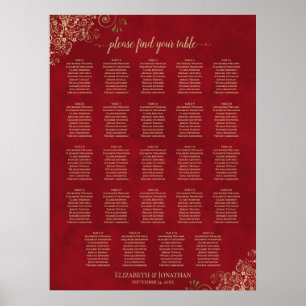
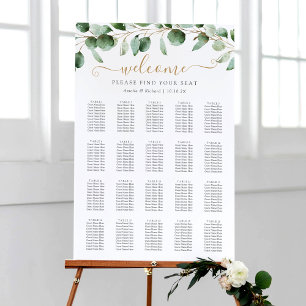
This seating chart was absolutely beautiful. The packaging was amazing, and it came out of the packaging looking perfect. The wording was easy to read, and the gold color font was perfect. Seating charts are finalized so late in the wedding process that I was worried about the timing. I worried for nothing, came in 2 days earlier than expected. Thank you!

Lorlie G., ★★★★★

Overall, the output turned out great! The product arrived in a protected box and no bends on the board. I used both sides for dual purposes. One side for the seating chart and the other side to create an unplugged ceremony sign. Worked out well!

Savannah M., ★★★★★

This worked out perfectly for our seating chart. The board was heavy enough to not move on our easel and looked great the whole time. 18 x 24 was a good size for our guest list of 65 people and left us with extra space!

Why Order Wedding Seating Charts on Zazzle?

Your wedding seating chart will be one of the last things you order before your ceremony, and with some organization, you’ll get it just right. From foam boards and posters to retractable banners and canvas prints, Zazzle offers a wide range of product types for wedding seating charts, as well as over 35,000 templates to choose from. Command strips, wooden frames, and poster stands are available depending on your product choice, and you have the option to incorporate a QR code linking to an online seating chart. Purchase Worry-Free Design Review and Delivery at checkout for a 100% satisfaction guarantee and an increased returns window of 60 days. Ordering a collection of wedding products? Zazzle Plus ($19.95 per year) comes with unlimited Standard delivery and a 30-day free trial.

Types of Wedding Seating Charts

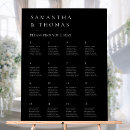
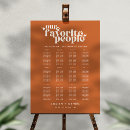
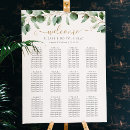
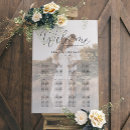
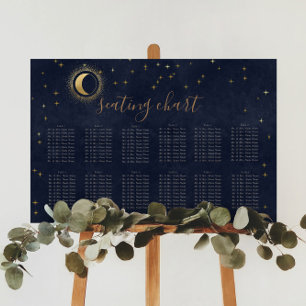
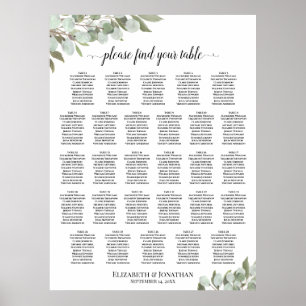
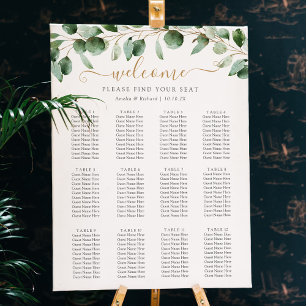
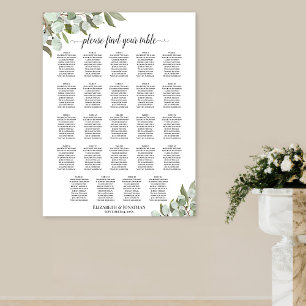
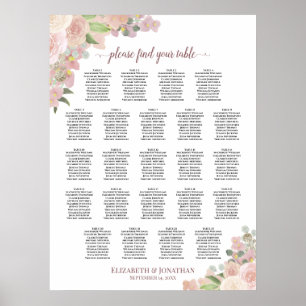
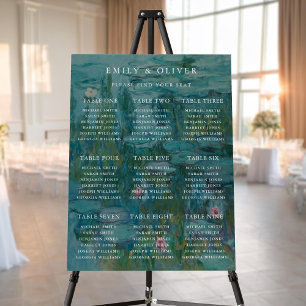
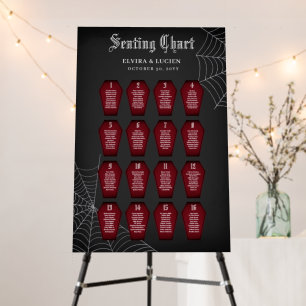
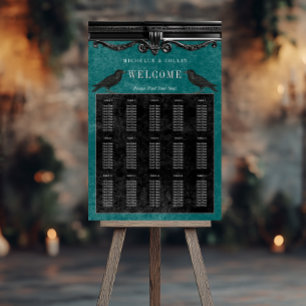
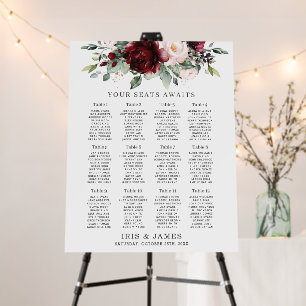
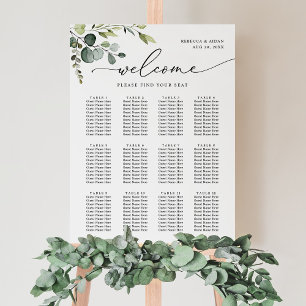
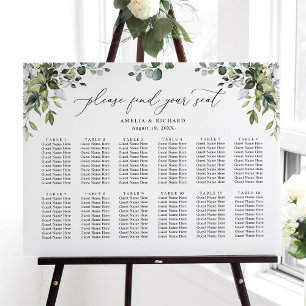
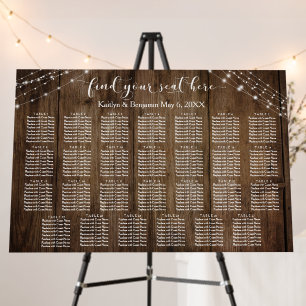
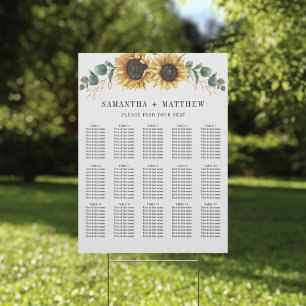
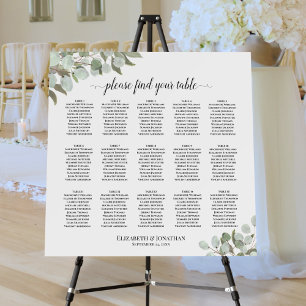
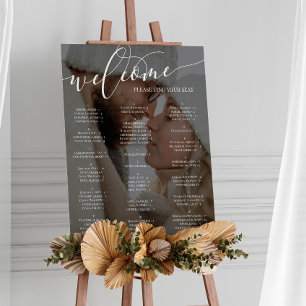
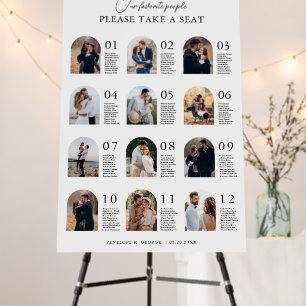
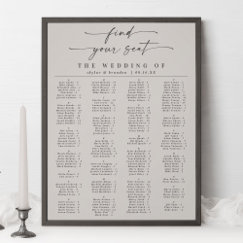
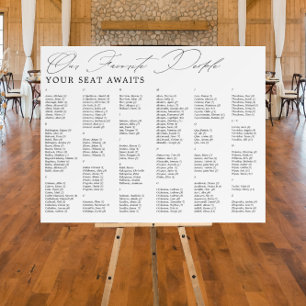
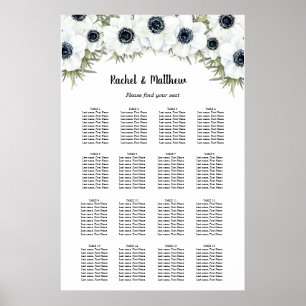
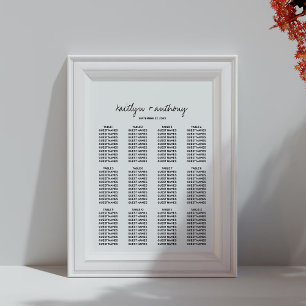
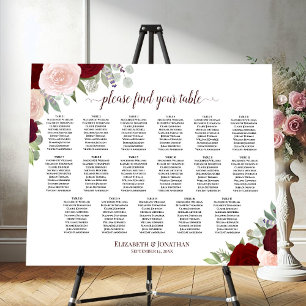
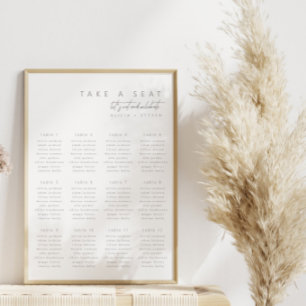
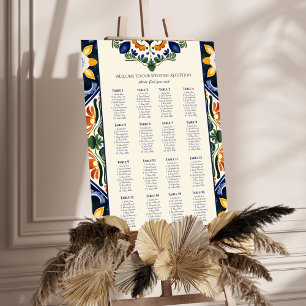
  • Foamcore Boards: With over 8 sizes to choose from (plus 3 additional squared foam board sizes), these seating charts are straightforward to customize and display, and they bring a clean, modern look to your wedding.
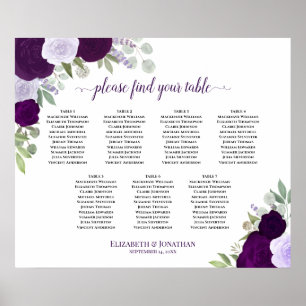
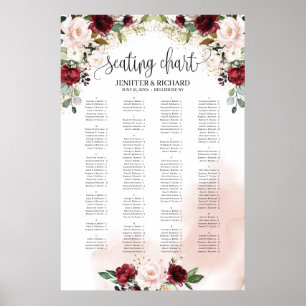
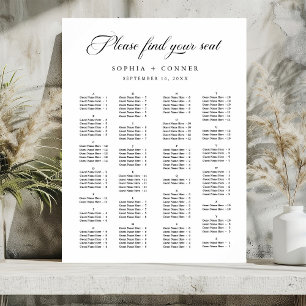
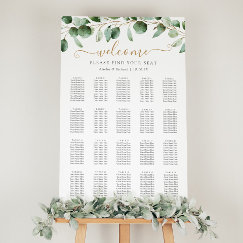
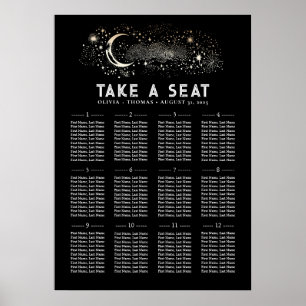
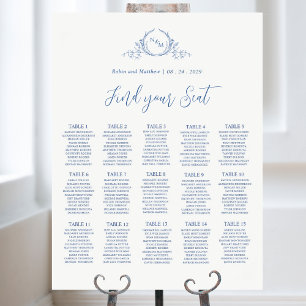
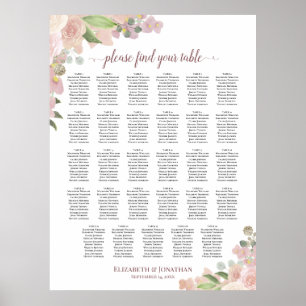
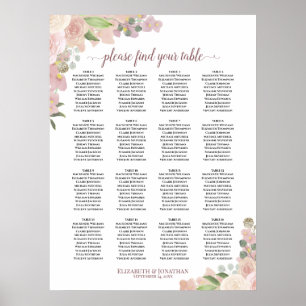
  • Poster Prints: Fully customizable to match your wedding theme, colors, and décor, posters are a lightweight, easy-to-frame alternative, with 18 sizes to choose from, making them ideal for any number of wedding guests.
  • Banners: Banners offer a convenient and professional way to display your wedding seating chart. Their retractable design makes them quick to set up, easily transportable, and protected when not in use.
  • Acrylic Signs: Acrylic signs bring a clean, premium aesthetic to your wedding reception. They’re highly durable, easy to read, and suitable for all types of weather conditions.
  • Pedestal Signs: Signs are a compact, freestanding option for displaying seating arrangements, with the option of choosing a light, durable plastic. They can be positioned on tables, shelves, or welcome areas, and are ideal if you’re opting for a QR code.
  • Canvas Prints: Canvas prints are available in 17 different sizes with the option of 3 different wood frames, making them ideal for all weather conditions. They double up as a post-wedding keepsake and can be coordinated with your chosen wedding theme.
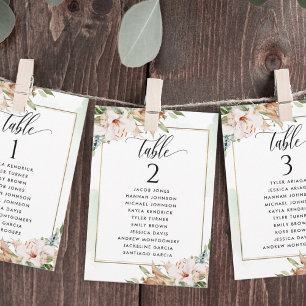
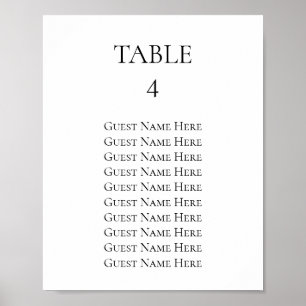
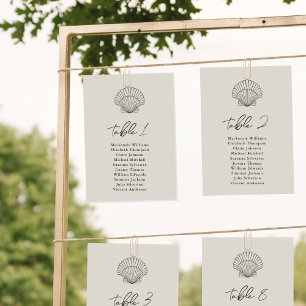
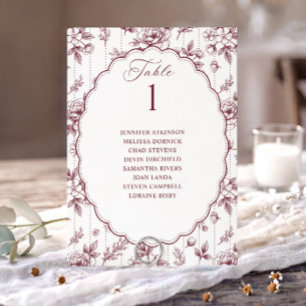
  • Cards: Wedding seating cards are simple, flexible, and can be used in conjunction with your chart. Individual cards can be arranged by table or clipped onto a piece of string, making it convenient for guests to find their seating assignments.

Frequently Asked Questions about Wedding Seating Charts

Do I need a seating chart, and at what guest count?

Yes, if you’re serving a sit-down meal. Most planners recommend having a seating chart for any wedding with a guest count of over 50. A seating chart helps guests find their tables quickly, prevents crowds from forming at the reception entrance, and keeps the dinner timeline running efficiently. Opting out of a seating chart isn’t wrong, but that works best at small and casual weddings, often requiring extra chairs since guests rarely fill tables evenly. For anything under 50 guests, a set of seating cards is all you’ll need, or a simple by-table chart for a little bit more organization.

When should I make and order it?

We recommend you start your chart as soon as the RSVP deadline passes, usually 3 or 4 weeks before the wedding. Aim to finalize your list of names and table assignments 2 to 3 weeks before the wedding, which gives you time to proofread and double-check before sending the chart off for printing. Expect there to be a few changes in the days leading up to it; cancellations and surprise plus-ones are common. Leave a few blank name strips on your chart, or arrange a QR code seating chart that you can regularly update, to avoid a last-minute reprint.

How long will it take to arrive?

Wedding seating charts can take up to 4 days to print, depending on which type you choose. Your shipping begins once the product has been completed and the label has been printed. We have three delivery options available, each with different estimates: Standard takes 4 to 7 days, Premium takes 2 to 3 days, and Express is 1 to 2 days. If you order a foam board with Premium shipping, for example, then that’ll take 3 days to produce and 2 days to arrive, so you’ll receive your order 5 working days after placing it, not including the day you order it. Zip and Zip PLUS are only available if you select poster prints or cards, and they’ll cut manufacturing down to a maximum of 1 day with delivery in 1 to 2 business days. To check production time frames and available delivery options, click the date just above the ‘Qty:’ button and enter your ZIP code.

What size do I need for my guest count?

We recommend a 16 x 20 inch chart for smaller weddings, and an 18 x 24 inch chart works for above 120 guests. For 150 to 300 guests, display 2 charts, and anything above 300 guests should have several charts to prevent overcrowding. If you’re opting for a QR code sign, print 1 for every 50 guests attending. Choose a clear font and leave space for names, as guests should be able to scan and find their table efficiently. Size up if you’re planning on placing the seating chart at a distance from where guests will read it.

Should I list guests alphabetically or by table, and how do I fit 300 or more guests?

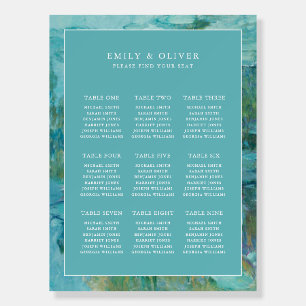
We recommend sorting by table for up to 150 guests. Anything above that, place the guests' names in alphabetical order by last name, then first name, with their table number displayed beside. However, as it’s a wedding, that might entail many family members sharing the same surname. In that case, you should stick with ordering by table or refine the names down even further.

How do I list couples with different last names, and should I use Mr. and Mrs.?

Listing full first and last names is the safest option. List couples together in one line: “John Mayer and Jane Smith.” Alternatively, keep their names separate with one half of the couple’s name first, followed by the second. Formal titles like Mr. and Mrs. suit a more traditional wedding, but only if you use them for every guest. If partners have different last names, titles can look awkward, and some couples don’t like being listed under one of the spouses' last names. Whatever your choice, keep it consistent throughout the seating chart or else it can look messy. If you’re unsure of a plus-one’s name, ask before customizing your seating chart.

Where should I display the seating chart?

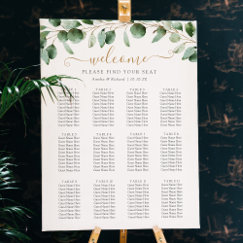
Display your chart beside the welcome table or near the entrance of the reception. Cocktail hour is the ideal time to set it out; this gives ample time for each guest to find their table and prevents a queue from forming. Place it on a sturdy easel at eye level, or if you’re opting for a QR code sign, keep it displayed clearly on a table. If the chart will be displayed outdoors, keep it in a shaded spot free from damp and wind.

How should I arrange the seats at my wedding?

  • Classic/Round: Round tables are arranged throughout the room, with 8 to 12 guests per table. This is ideal for traditional weddings and creates a balanced atmosphere.
  • Banquet: Long rectangular tables arranged in rows, with guests on both sides of the tables. This is useful for larger weddings, and the layout creates a relaxed, communal dining experience.
  • Theater: Chairs are placed in straight rows, all facing the focal point, generally being the ceremony, speeches, or the bride and groom. This maximizes the seating capacity while allowing every guest to have a clear view of the front.
  • U-Shape: Tables are arranged in a U-shape, with guests seated on the outside of the tables, leaving an open space in the center. This creates an intimate setting, leaving the space in the middle for dancing and speeches.
  • Chevron: Long rectangular tables are positioned to create a series of V-shapes or zigzag formations. This layout encourages conversation among guests and can be used to utilize the event space efficiently.

What other products pair well with wedding seating charts?

  • Wedding Place Cards: Wedding place cards show every guest exactly where they’re seated, avoiding confusion and keeping the reception flowing. For larger weddings, they assist in ensuring guests are seated according to the seating chart.
  • Wedding Signs: Wedding signs provide a clear introduction incorporating the couple's chosen theme. They can also be used to help guests find key areas such as the ceremony, reception, seating, or guest book.
  • Wedding Programs: Programs provide an overview of the ceremony, including the order of events and any other important details. Along with your seating chart, programs are another way to keep the timeline moving smoothly and make sure guests understand what to expect throughout the day.